Help Opossums
I’ve found a baby Virginia opossum. What should I do?
These shy, crepuscular (most active at dawn and dusk) mammals are our adorable toothy friends who may look a little different to some but are some of our most helpful neighbors, performing natural pest control — and cleanup — for free!
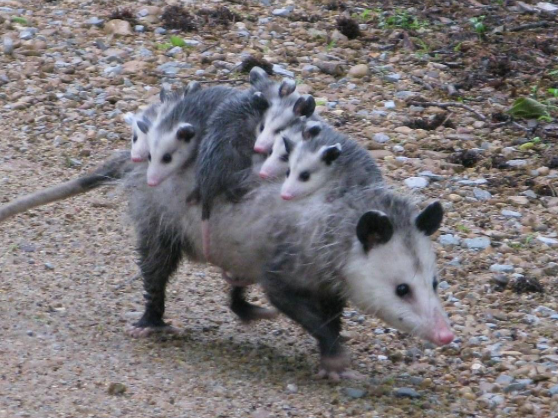
Baby opossums, called joeys, are the size of a bumble bee when they’re born, and spend the first several months in mom’s pouch. Once they emerge, they climb onto her back and cling to her fur as she moves.
If you find a joey and mom is nowhere to be seen, this baby needs immediate intervention. If you see ONE, always look for others, as opossums can have up to 13 joeys in a passel. Where one is left behind, others may be scattered, so step carefully and listen closely. Joeys make a small chirping noise (videos below) when searching for mom. If you find any, contact us right away.
Warning! Baby opossums are a little different from other baby mammals in that their body temperature is lower by design. This means they can overheat easily. So while it’s important to keep them in a quiet, dark, safe place while you await our callback, and it’s important to shield them from cold, always ensure that the container they are in has ample room away from any heat source and that there is adquate ventilation.
I’ve found a wounded or dead opossum. How do I check for babies in her pouch?
Car strikes are a common cause of death for opossums, and often the victims are mother opossums with joeys in her pouch, clinging onto her, wandering around her or all of the above. If you find a wounded or deceased adult opossum, and it is safe for you to stop and check her, in addition to collecting any nearby joeys, you should check her pouch for others (videos below). You may find very young joeys attached to their mothers’ teets. Do NOT attempt to remove them. In this case, it is critical that you bring the mother’s body with the joeys attached to a licensed wildlife rehabilitator with experience in this very delicate extraction technique.
There’s an opossum standing on the side of the road. Should I be concerned?
Yes. Consider this behavior a sign of injury or distress. If you can safely contain the opossum, prioritizing your safety on a roadway, please do so. If you are not able to do so, if you can safely stop and stay parked near the animal, please do so and call us for guidance.
There’s an opossum in my yard apparently unafraid of (approaching or not responding to) humans. Should I be concerned?
Yes. Consider this behavior a sign of injury or distress. If you can safely contain the opossum, please do so, and then call us for guidance.
-
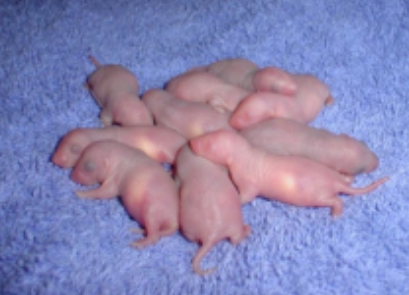
![10 Pinkie opossums (1-2 weeks old)]()
Pinkie opossums (1-2 weeks old)
-
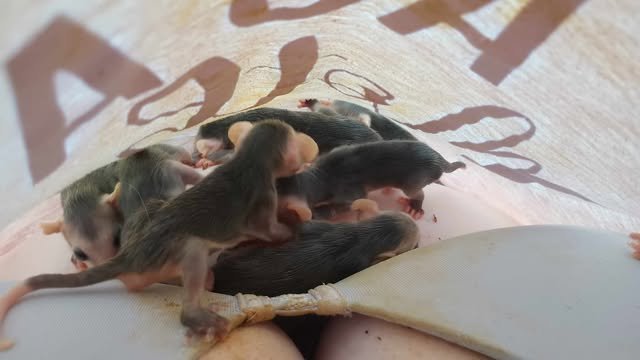
![5 or 6 infant opossums]()
6-7 week-old opossums
-
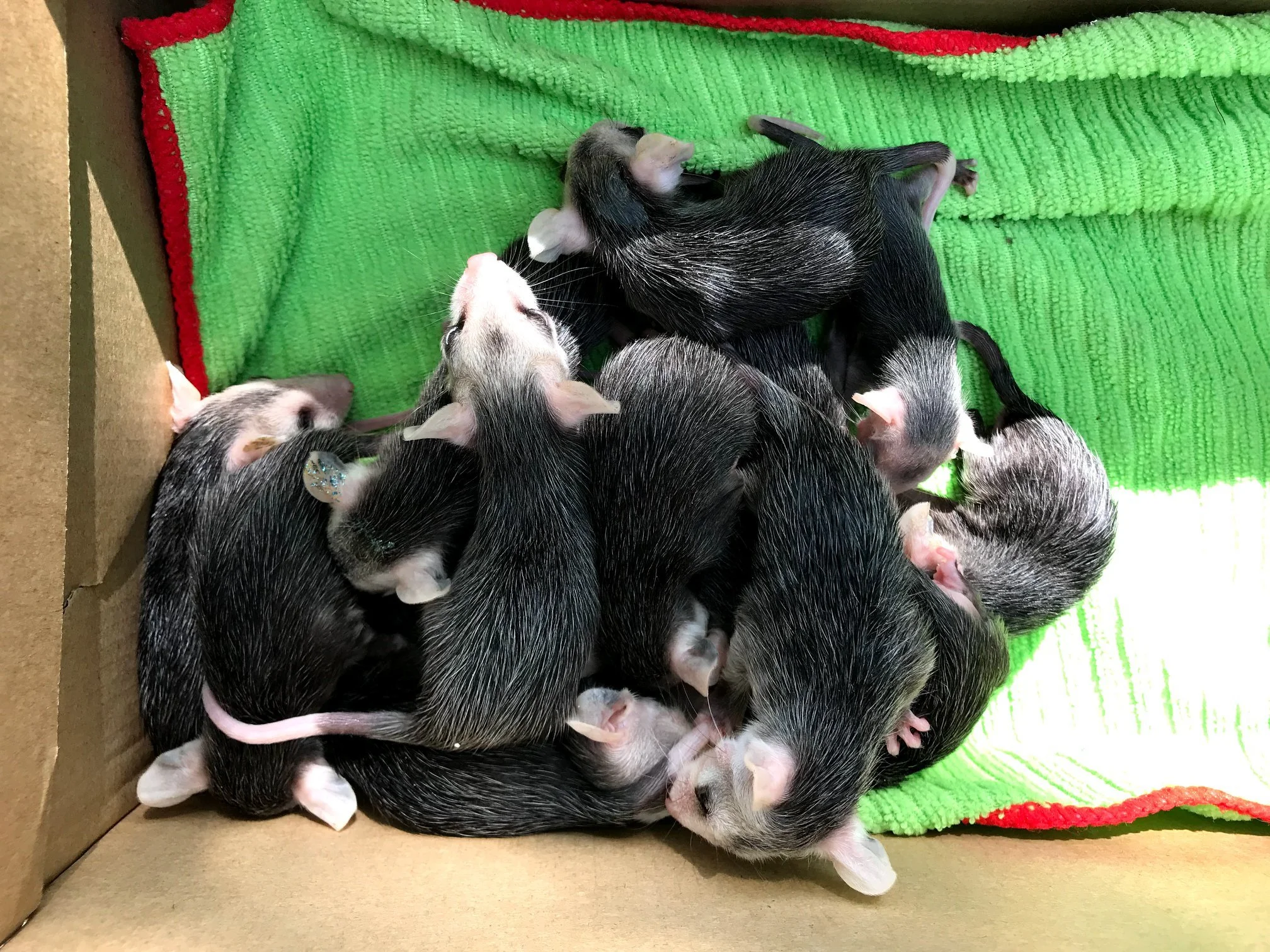
![about a dozen baby opossums with fur in a cardboard box with a towel]()
10-12 week-old opossums
-
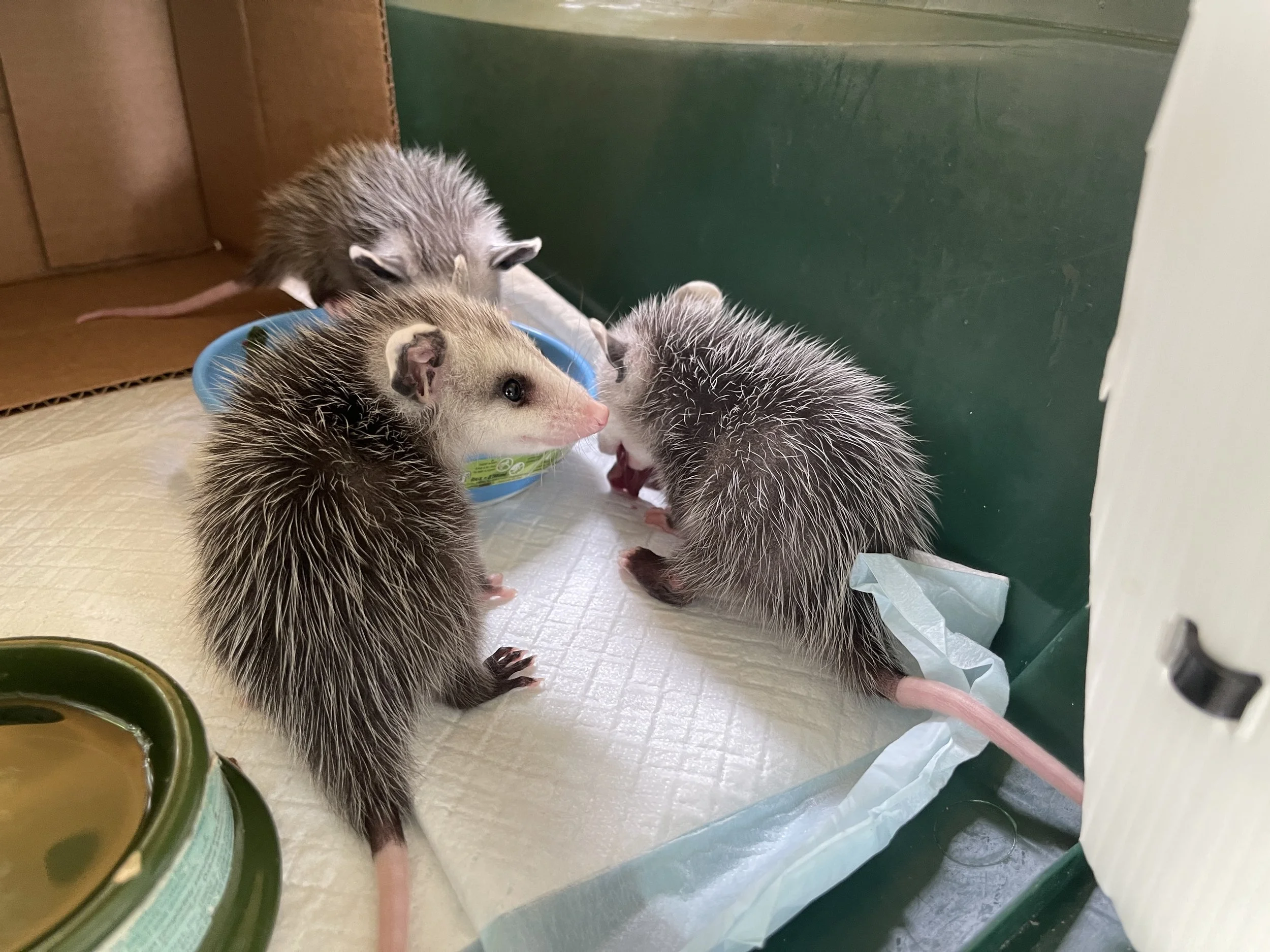
![three young opossums in a plastic carrier with a puppy pad eating out of a dish]()
13-20 week-old opossums
-
![6 joeys riding on their mother's back]()
Mother opossum and her joeys