

Help Chipmunks and 13-lined Ground Squirrels
I’ve found a baby ground-dwelling rodent. What should I do?
Since eastern chipmunks and thirteen-lined ground squirrels are ground dwellers, they come into our care through injury, illness, abandonment or flooding, rather than falling from a nest, as is common with tree squirrels. Infants are not candidates for reunification with mom and will need to be admitted.
-
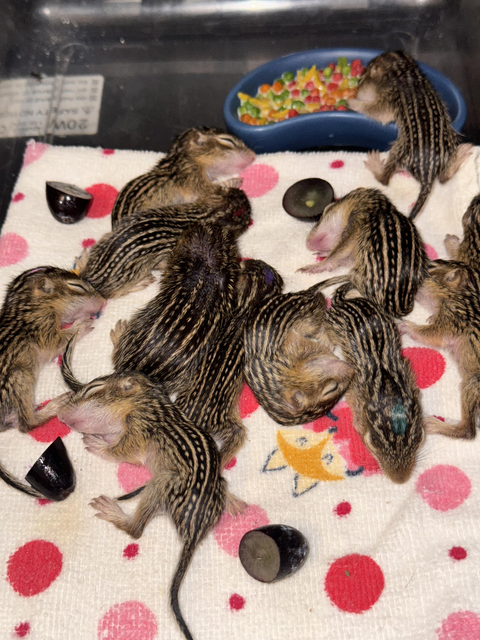
![12 infant thirteen lined grond squirrels lying on a blanket]()
13-lined ground squirrels
-
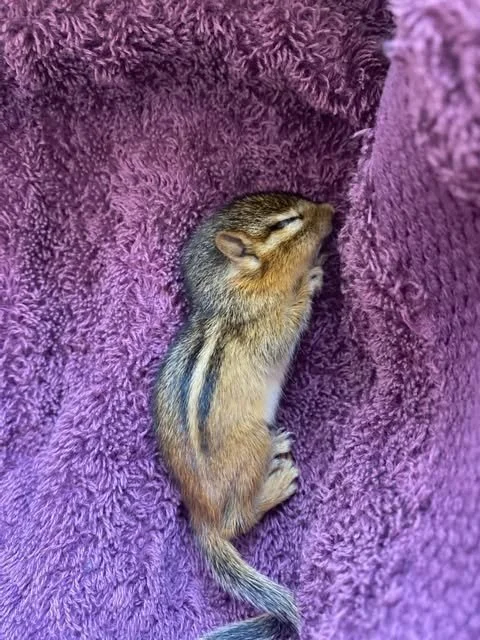
![Dehydrated orphaned easterm chipmunk lying on purple towel]()
Dehydrated and orphaned eastern chipmunk
-
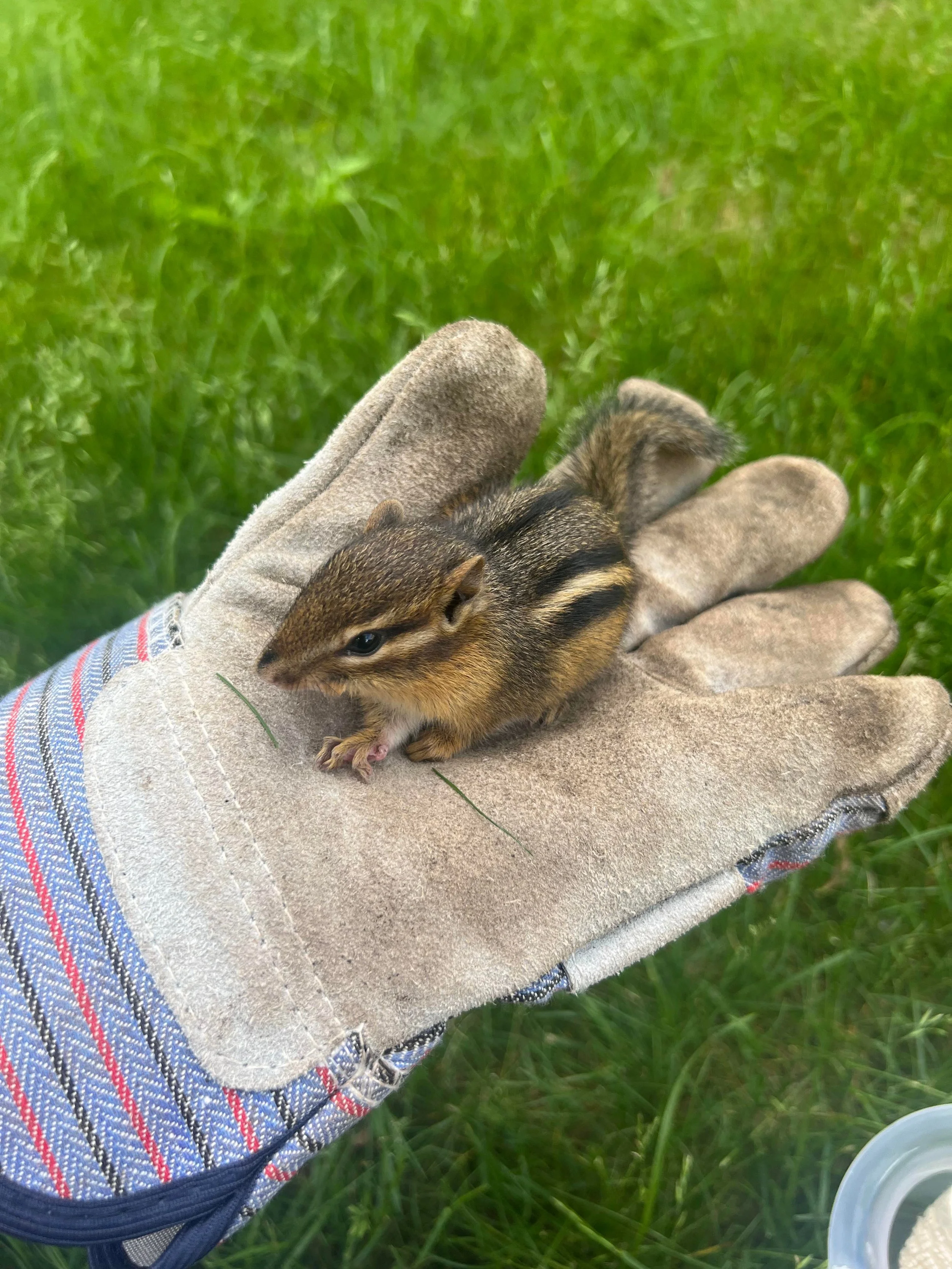
![Hand wearing leather glove holding juvenile chipmunk]()
Juvenile eastern chipmunk
-
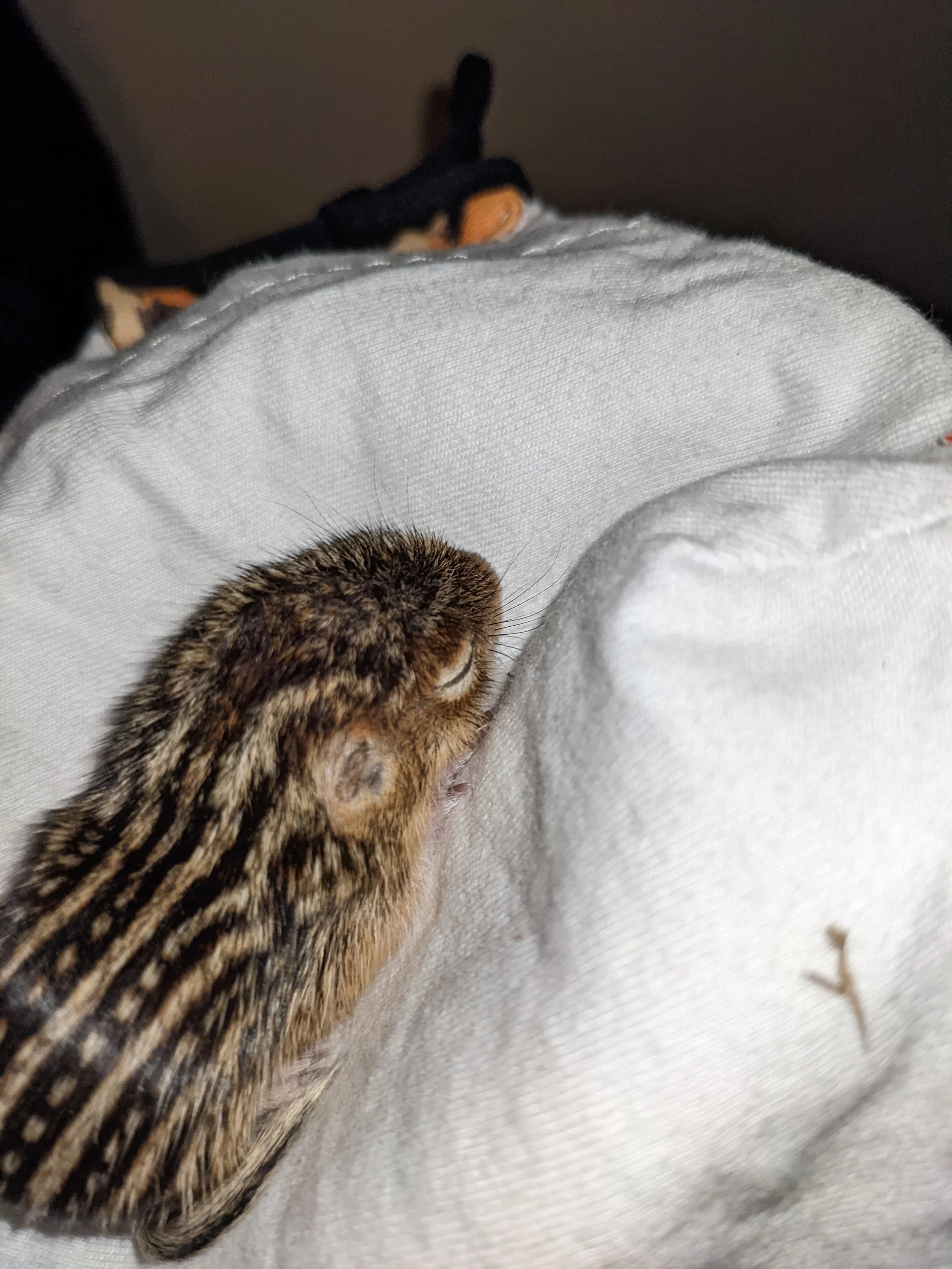
![infant thirteen lined ground squirrels]()
Infant 13-lined ground squirrel
-
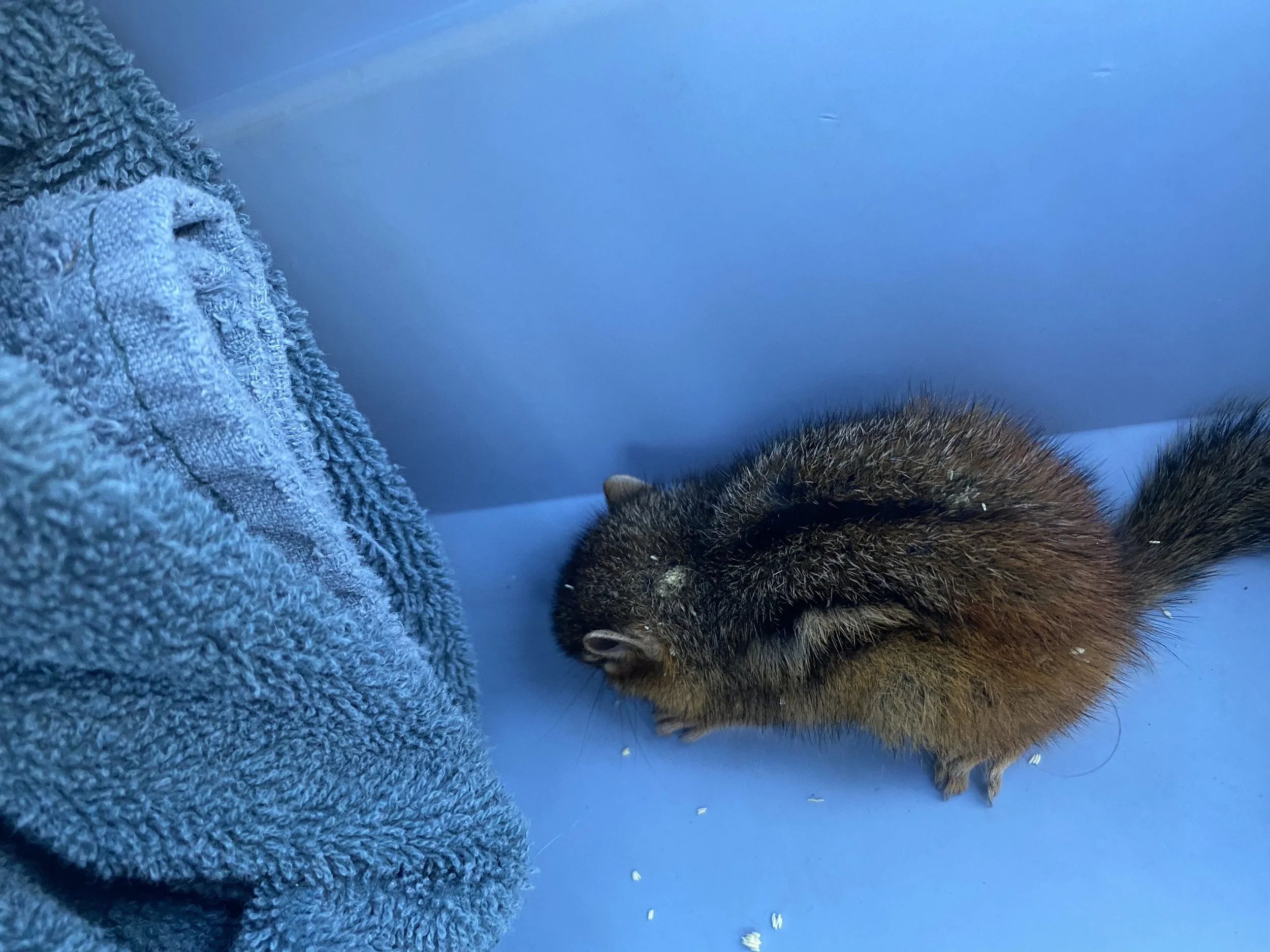
![]()
Juvenile chipmunk with flystrike (tiny eggs that hatch into maggots)
About Eastern Chipmunks
Eastern chipmunks are ground-dwelling rodents with five black stripes on their back. Litters of 3-5 babies are born in March through September. Mothers generally have 2-3 litters per year.
At 3 weeks old, babies are fully furred with their ears open. At 4 weeks, their eyes open and stripes become clearly visible on their fur. They are fast-moving and active. In the wild, babies are weaned at about 5 weeks old.
Most orphaned chipmunks are not found since they are born deep within underground chambers. Excavating, predator digging or flooding may cause them to become unearthed.
If you have found an orphaned chipmunk, contact us right away.
In very rare circumstances — for example, the den is partially intact and the mother is stilll there — finders may try to reunite babies by leaving them in a secure container near the den entrance and observing.
Most likely, orphaned chipmunks must be brought to a licensed wildlife rehabilitator.
This is especially true if a baby has been caught by a dog or cat. Even if they appear uninjured, they may be in shock and must be seen by a rehabilitator.
About 13-lined Ground Squirrels
Thirteen-lined ground squirrels, as their name implies, have 13 stripes (7 dark stripes separated by 6 ligther stripes). Mating occurs in early spring, and litters of about 8 babies are born a month later.
At 3-4 weeks, their eyes and ears open, and they become increasingly active at 5-6 weeks. By weeks 7 and 8, they have thick coats and are very active and fast.
Like chipmunks, orphaned 13-liners are most often found as a result of human disturbance, predator digging or flooding.
If you have found an orphaned 13-lined ground squirrel, contact us right away.
Thirteen-lined ground squirrels are diurnal, venturing above ground when the sun is high and retiring to the warmth and safety of their burrows at sundown. Because ground squirrels spend most of their lives below ground, they build extensive burrows. They make three types of burrows:
• Hiding burrows can be up to 20 feet long, and there are a lot of them. A ground squirrel’s main defense is to detect danger and quickly flee to one of these burrows, which have a complex system of entranceways.
• Nesting burrows
• Hibernating burrows, which are below the frost line (20-40 inches deep) and have a blocked entrance. In late summer they start gaining weight in preparation for winter dormancy. They remain in these burrows from September to March. During hibernation, their body temperature falls to just above freezing and their heart rate drops to 20 beats per minute from its usual 200. Respiration falls from 100-200 breaths per minute to one breath every 5 minutes.
Mating begins about 2 weeks after the squirrels emerge from hibernation. After a gestation period of 28 days, 3-14 (average 10) blind, naked young are born weighing 3-4 gram. Only litter is produced per year.